MEDiCS TECHNOLOGY
A New Paradigm in Cancer Treatment
A major barrier for curing cancer is related with the phenotypic and functional diversity of malignant cells within a tumor. This heterogeneity typically follows a hierarchical structure, with a distinct subpopulation of cells endowed with an enhanced, long-term capacity for self-renewal. These cells, known as Cancer Stem Cells (CSCs), are highly chemoresistant and are the main drivers of cancer progression, metastasis and relapse.
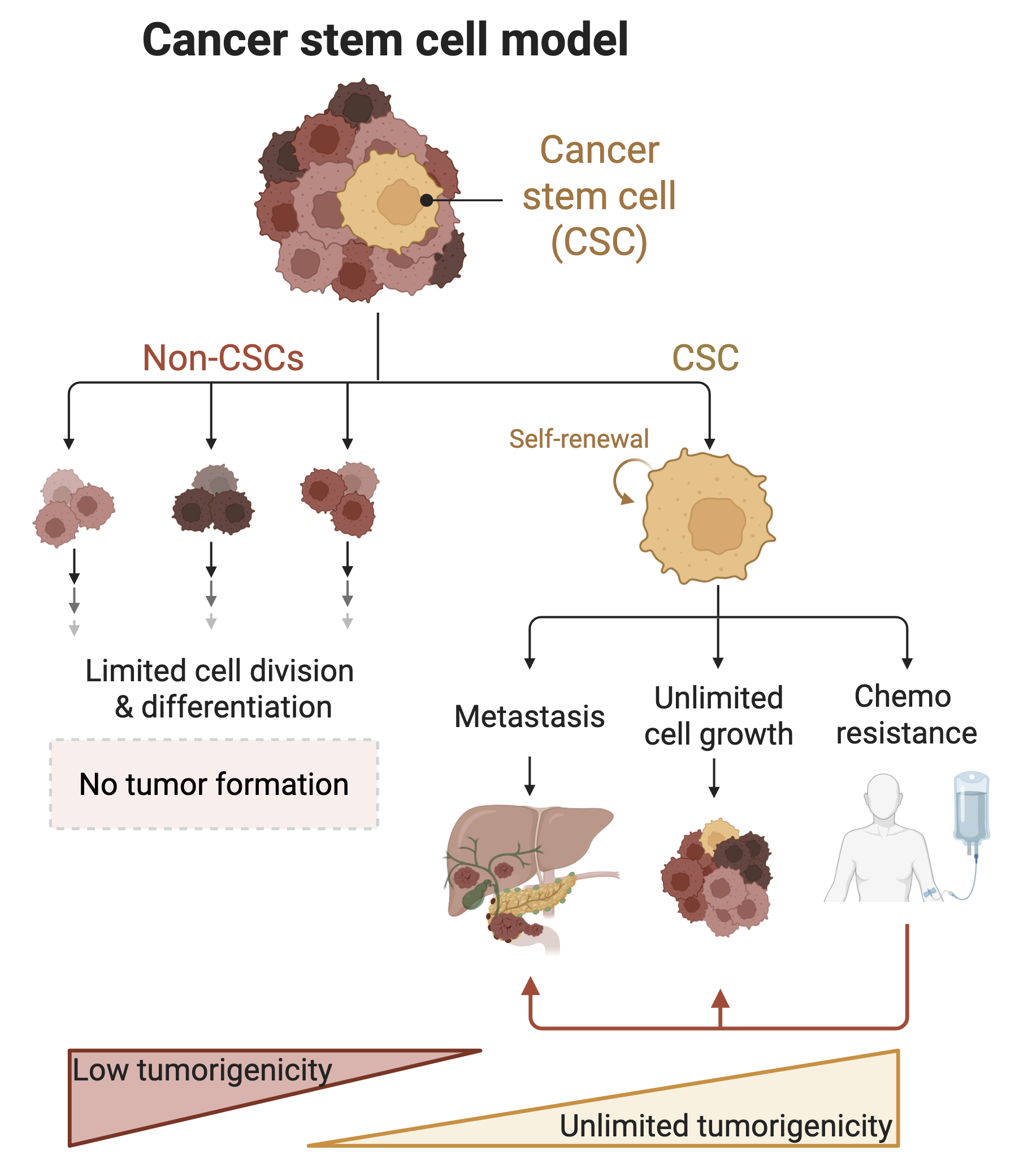
MEDiCS is focused on the development and clinical translation of a novel class of anticancer agents designed to target key metabolic features of Cancer Stem Cells (CSCs). Specifically, we have discovered a new anticancer lead candidate, called IGN116, that is able to disrupt the bioenergetic metabolism of CSCs, highly dependent of aerobic oxidative phosphorylation (OXPHOS). Our studies suggest that IGN116 binds to mitochondrial DNA and halts the transcription of genes regulating OXPHOS, resulting in the suppression of key stem-like properties such as self-renewal, CSC marker expression, and tumor-initiating capacity. The compound has shown exceptional promise in preclinical models of pancreatic ductal adenocarcinoma (PDAC) and colorectal (CRC). In six different PDAC and 1 CRC patient-derived xenograft (PDX) models, IGN116 demonstrated rapid and sustained inhibition of tumor growth, with cytostatic effects visible as early as 1–2 days post treatment initiation. Notably, this therapeutic effect occurs with a good safety profile.
Breakthrough and Future Directions
Despite widespread interest in anti-CSC therapies, currently there are not compounds in the clinic targeting CSC OXPHOS. By leveraging advanced synthetic chemistry and translational cancer biology, we have positioned IGN116 as a a new type of therapeutic tool that can fill this gap.
Currently at TRL 3-4, the technology based on IGN116 has demonstrated in vivo efficacy, confirmed the mechanism of action, and completed both pharmacokinetic (PK) studies and a 28-day repeated dose toxicity assessment in mice, including histopathology. These studies were conducted both in in-house and in external CRO led validation.
Through the MEDICS project, we aim to advance IGN116 toward clinical application and redefine the standard of care for patients with aggressive, treatment-resistant cancers.